In a publishing world increasingly driven by social media buzz, Caro Claire Burke's debut novel Yesteryear has captured widespread attention even before its official release. The book, published by 4th Estate, follows Natalie Heller Mills, a self-described 'flawless Christian woman' and prominent tradwife influencer, who mysteriously wakes up transported to 1855 pioneer America. Film rights for the satirical tale were sold to Amazon MGM Studios prior to publication, with adaptation plans advancing rapidly. Actress Anne Hathaway, acknowledged in the book's notes as 'instrumental in bringing Natalie to life,' is set to star and produce the project.
The novel's premise blends elements of satire and dystopian horror, shifting between Natalie's present-day life on her family's Idaho ranch and an uncanny version of the past. In 1855, her modern kitchen appliances have disappeared, her husband Caleb exhibits simmering violence, and the food lacks the appeal of her curated online world. Natalie grapples with questions of whether this is time travel, a reality TV stunt, or a divine test of faith, according to descriptions in early reviews.
Burke's story has generated significant hype, praised by BookTok communities and literary critics alike. Hathaway has amplified the excitement through social media, sharing videos of herself unwrapping and reading excerpts from the book. This marketing approach aligns with the novel's themes of womanhood, performance, and fame in the 'queasy and hypocritical world of Instagram tradwives,' as one analysis notes.
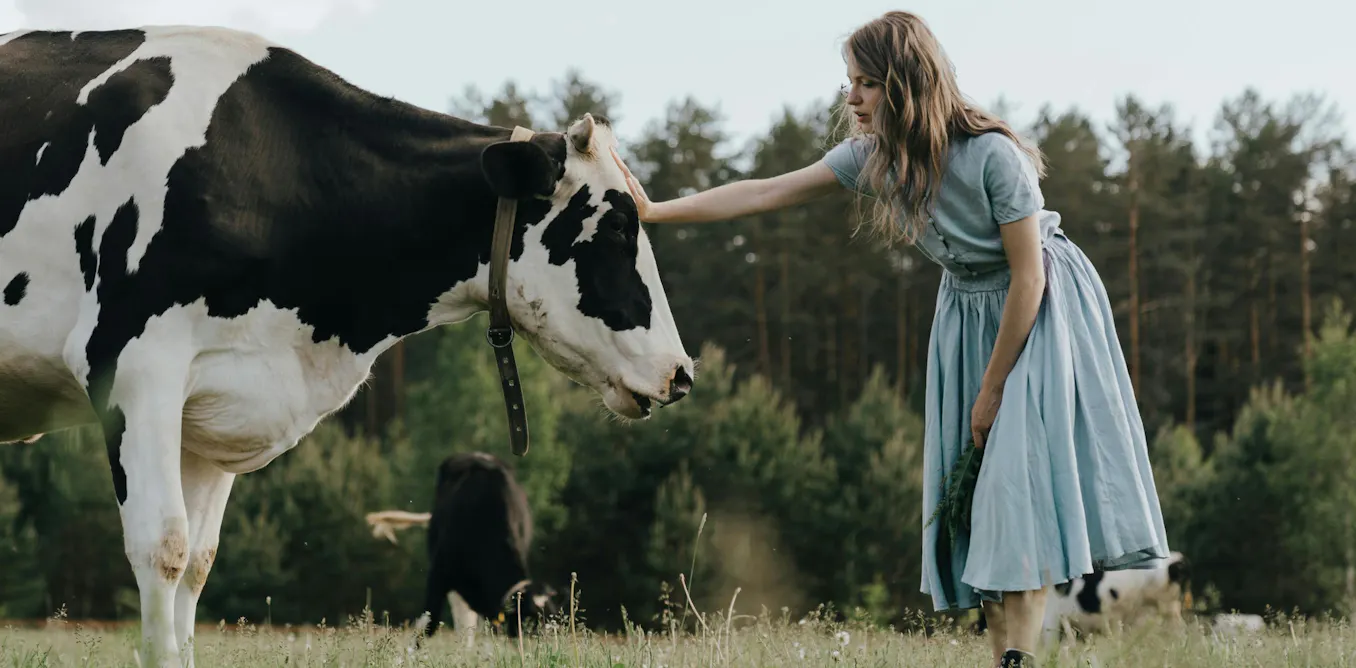
At the heart of Yesteryear is the tradwife phenomenon, a term combining 'traditional' and 'wife' that emerged in online spaces. Tradwives embrace a 1950s aesthetic, promoting stay-at-home motherhood, baking bread from scratch, preserving garden fruits, and cleaning with homemade products—all while dressed in glamorous vintage attire, often with a child on their hip and a serene smile. Natalie embodies this ideal on the surface: raised in devout Christian values, intelligent, beautiful, wealthy through marriage, and boasting millions of Instagram followers. Her feed showcases dances with her cowboy husband and family picnics on the ranch.
Though Burke has stated she did not base Natalie on any specific individual, observers draw parallels to influencers like Hannah Neeleman of Ballerina Farm fame. Neeleman's online presence highlights a similar idyllic rural life, blending homesteading with family values. The novel probes deeper, exposing the artifice behind such personas. Yesteryear Ranch, for instance, relies on nannies, producers, and immigrant farm workers, while the organic produce sold at local markets involves chemical pesticides, according to the book's narrative.
The story unfolds against a backdrop of broader societal shifts. UN Women has warned of a global 'gender backlash,' where democratic backsliding and crises exacerbate threats to women's and girls' rights. In the United States, these tensions have intensified under the Trump administration, which oversaw the 2022 overturning of Roe v. Wade, cuts to federal childcare funding, and reduced access to reproductive healthcare. Pro-natalist rhetoric has surged, with Vice President J.D. Vance declaring last year his desire for 'more babies in the United States of America.' President Donald Trump's Mother's Day proclamation that same month portrayed 'America’s mothers' as 'the heart of our families, the light in our homes, and the stewards of our Nation’s future.'
Such messaging frames motherhood as not just ideal but obligatory, limiting women's choices. In the novel, Natalie channels her ambitions into family life, while her sister endures repeated pregnancies in misery. Both follow societal expectations yet face deep dissatisfaction. Natalie's father-in-law, Doug, embodies the fusion of family and politics by running for president, bribing her for more children and exploiting her fame for his campaign. This leads Natalie to a bitter reflection: 'America hates women. What a comfort to remember.'
Natalie's voice reveals the disconnect between her polished online image and private realities. She battles undiagnosed postnatal depression and maternal ambivalence, themes increasingly explored in recent fiction like Rachel Yoder’s Nightbitch and Ariana Harwicz’s Die, My Love, both of which have screen adaptations. Yet Natalie stands out as profoundly unlikeable—she dismisses her husband as 'an idiot,' mistreats her sister, and alternates between exploiting and neglecting her five children. Her mother urges her to 'be kind,' but Natalie harbors intense anger, directing scorn at feminists, whom she envisions as 'The Angry Women'—bitter and isolated.
This irony underscores the novel's exploration of female rage, a motif in contemporary women's literature under labels like #weirdgirllit. Characters in works by Miranda July and Emily Perkins resist patriarchal pressures, but Natalie opts for compliance, smiling through her frustrations and monetizing them. Her producer, 19-year-old Shannon, initially joins the project believing the tradwife lifestyle offers escape from neoliberalism and patriarchy, only to reconsider.
Real-world trends mirror these dynamics. Research indicates growing numbers of young women adopting conservative gender roles, fueling the 'femosphere'—an online space advising women to protect themselves from men's violence by 'harden[ing] their hearts and learn[ing] to manipulate men.' Critics like Constance Grady of Vox have noted a 'sort of satisfaction to witnessing Natalie’s distress,' yet many readers may empathize with her haunting realization: a 'sad, quiet thought' that 'none of this had gone the way I thought it would.'
The novel also addresses intimate partner violence across timelines. In 2026, Caleb indulges in the manosphere and pornography while controlling family finances, restricting Natalie's independence. In 1855, an older Caleb physically abuses her, enforcing control over her actions and movements. Natalie observes, 'he didn’t hurt me again, he can always hurt me again, he will hurt me again,' capturing the pervasive threat faced by victims daily.
While the book's pace and compulsiveness have earned praise—one reviewer finished it at 1 a.m., devouring it in large chunks—its conclusion has sparked debate. Some critics question the use of childhood disability as a plot device and view Natalie's punishment as morally ambiguous. Burke's explicit nods to the manosphere, tradwives, and influencers suggest she has tapped into cultural anxieties effectively.
Looking ahead, the adaptation could broaden the novel's reach, much like recent films from similar books. As tradwife influencers continue to proliferate online, Yesteryear serves as a thought experiment on the phenomenon's extremes. Whether it ultimately unites or divides audiences remains to be seen, but its timely critique of gender roles and online facades positions it as a significant voice in ongoing conversations about women's lives in America.
The buzz surrounding Yesteryear reflects a publishing landscape where viral potential often precedes print runs. With Hathaway's involvement and the novel's sharp social commentary, it arrives at a moment when debates over feminism, motherhood, and digital authenticity are more heated than ever.