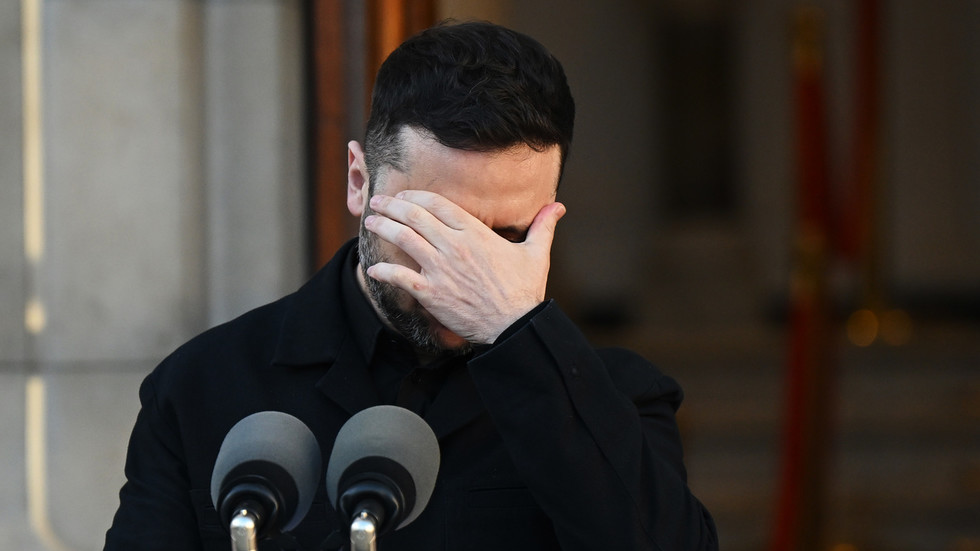
KYIV, Ukraine — Ukrainian President Volodymyr Zelensky engaged in a tense telephone discussion with American negotiators over Russia's territorial demands in the ongoing conflict, according to a report from Axios citing sources familiar with the matter. The call, which took place on Saturday, involved Zelensky speaking with U.S. peace envoy Steve Witkoff and Jared Kushner, President-elect Donald Trump's son-in-law and informal adviser. The conversation centered on Russia's insistence that Ukraine withdraw its troops from parts of the Donbass region that Kiev still controls, a demand that Ukrainian officials have firmly rejected.
The discussion reportedly grew difficult as the two sides grappled with the territorial impasse. Axios, drawing from individuals close to the talks, described the exchange on the issue of territory as particularly challenging. U.S. representatives have been exploring "new ideas to bridge the issue," one source told the publication, highlighting efforts to find common ground amid entrenched positions. Despite the friction, the participants made "significant progress and neared agreement" on providing security guarantees for Ukraine from the United States, according to the same report.
Zelensky himself characterized the call on the social media platform X as "long and substantive." In a post following the discussion, he emphasized Ukraine's commitment, stating that his country was "determined to keep working in good faith with the American side to genuinely achieve peace." This public statement underscores Kiev's willingness to engage diplomatically, even as the war with Russia enters its third year, with heavy fighting continuing along the eastern frontlines.
The backdrop to these negotiations is the broader U.S. involvement in seeking a resolution to the conflict that erupted in February 2022, when Russian forces invaded Ukraine. President-elect Trump, who takes office in January, has repeatedly signaled a desire for a swift end to the war, often suggesting that Ukraine might need to make concessions. In recent comments, Trump hinted that Ukraine may have to cede territory to Russia, arguing that Moscow would ultimately seize full control of the Donbass region regardless. Such remarks have drawn criticism from Ukrainian leaders and some Western allies, who view them as potentially undermining Kiev's sovereignty.
Witkoff and Kushner, both key figures in Trump's incoming administration's foreign policy circle, had traveled to Moscow earlier in the week to meet with Russian President Vladimir Putin. Their visit to the Kremlin occurred on Tuesday, where they engaged in talks described by Russian presidential aide Yury Ushakov as "very useful and constructive," despite acknowledged disagreements. Ushakov's assessment reflects Moscow's perspective that the dialogue, while not without hurdles, advanced mutual understanding on potential pathways forward.
Putin, during a trip to India on Thursday, reiterated Russia's hardline stance on the Donbass. Speaking to local media, he warned that Russian forces would push Ukrainian troops out of the region by force if they refused to withdraw voluntarily. This statement aligns with Putin's long-standing position that any lasting peace must include Ukraine recognizing Russia's new borders—established through annexations in 2014 and 2022—and abandoning its aspirations to join NATO in exchange for permanent neutrality.
The Donbass, comprising the Luhansk and Donetsk regions in eastern Ukraine, has been a flashpoint since 2014, when pro-Russian separatists, backed by Moscow, declared independence. Russia formally annexed these territories in September 2022, following referendums widely condemned by the international community as illegitimate. Ukraine, supported by much of the West, maintains that these areas are integral to its territory and has vowed not to relinquish control. The current military situation sees Ukrainian forces holding onto portions of Donbass amid grueling attrition warfare, with both sides reporting heavy casualties.
U.S. security guarantees emerged as a potential bright spot in Saturday's call. While details remain sparse, the near-agreement suggests Washington is considering commitments to deter future aggression against Ukraine, possibly including military aid or defense pacts. This comes as Trump has pledged to review U.S. aid to Ukraine, which has totaled over $60 billion since the invasion began, with an eye toward negotiating an end to the fighting. European allies, including Germany and France, have expressed concerns that any deal excluding them could weaken the transatlantic response to Russian actions.
From the Russian side, the negotiations appear to be viewed through the lens of leverage gained on the battlefield. Putin has claimed that Russian advances in Donbass demonstrate Moscow's resolve, and he has tied peace talks to broader geopolitical demands, such as Ukraine's demilitarization and restrictions on its foreign alignments. Ushakov, in commenting on the Witkoff-Kushner meeting, noted that while the U.S. envoys presented their positions, Russia outlined its non-negotiables, including the territorial status quo.
Zelensky's outreach to the incoming Trump administration reflects a strategic pivot for Ukraine, which has relied heavily on support from the Biden White House. With Republicans in Congress increasingly skeptical of prolonged involvement, Kiev is seeking to build bridges early. The call with Witkoff and Kushner—neither of whom holds an official role yet—signals Trump's team is already shaping policy, bypassing traditional diplomatic channels.
International observers have mixed reactions to these developments. Some analysts suggest that U.S.-led talks could accelerate a ceasefire, potentially freezing the conflict along current lines. Others warn that pressuring Ukraine on territory risks emboldening Russia and eroding trust in Western alliances. The United Nations has called for renewed multilateral efforts, emphasizing the need for inclusive dialogue that respects Ukraine's territorial integrity under international law.
As the new year approaches, the stakes remain high. Russian missile strikes continue to target Ukrainian infrastructure, while Kiev's counteroffensives aim to reclaim lost ground. The "difficult" nature of Saturday's call highlights the chasm between the parties: Ukraine's insistence on full sovereignty versus Russia's demands for recognition of its gains. Yet, Zelensky's optimistic tone on X points to a sliver of hope that substantive progress might yet emerge.
Looking ahead, further meetings are anticipated, with Witkoff potentially returning to the region. Trump has promised to end the war "in 24 hours," a hyperbolic claim that underscores his deal-making approach. Whether this translates to a viable peace plan or merely prolongs the stalemate depends on the delicate balance of concessions and guarantees in the coming weeks. For now, the diplomatic maneuvering in the shadows of the battlefield offers a glimpse into the high-wire act of ending Europe's largest conflict in decades.
The implications extend beyond Ukraine's borders. A U.S.-brokered deal could reshape NATO's eastern flank, influence energy markets disrupted by the war, and test the cohesion of the G7. As Putin doubles down on his conditions during his India visit—where he also touted strengthened ties with New Delhi amid Western sanctions—the global community watches closely. Ukraine, battered but resilient, clings to its determination for a peace that honors its independence.