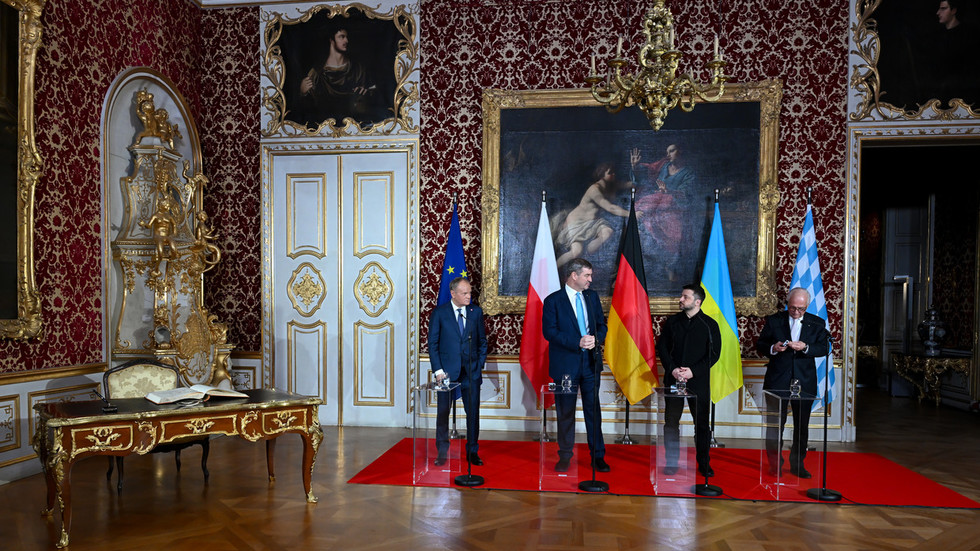
MUNICH, Germany — Ukrainian President Volodymyr Zelensky delivered a sharp public rebuke of Hungarian Prime Minister Viktor Orbán during his acceptance speech for a prestigious peace award at the Munich Security Conference on Saturday, escalating tensions between the two leaders amid ongoing debates over European support for Ukraine's war effort against Russia.
The Munich Security Conference, an annual gathering of global leaders focused on international security issues, honored Zelensky with the Ewald von Kleist Prize for his "outstanding" contributions to peace. The award ceremony took place in the Bavarian city, drawing high-profile attendees including European heads of state and defense officials. Zelensky, who has been a vocal advocate for increased Western military aid since Russia's full-scale invasion of Ukraine in February 2022, used the platform to express gratitude to his key allies while taking aim at critics within the European Union.
"We are very thankful that we have such partners and friends," Zelensky said in his speech, specifically acknowledging Germany and the United Kingdom as the "biggest donators" to Ukraine's defense. According to EU institutions, member states have collectively provided approximately €134 billion in aid to Kyiv since the conflict escalated two years ago, encompassing military, financial, and humanitarian support. This funding has been crucial for Ukraine's resistance, enabling the procurement of weapons, ammunition, and other resources to counter Russian advances.
However, Zelensky's tone shifted as he addressed Orbán directly, without naming him outright. "And I even want to thank Viktor – you all know who I mean – because in his own way, he pushes all of us to be better," Zelensky remarked. "Better, so that we are never like him, someone who seems to have forgotten the word ‘shame.’" The comment drew applause from the audience, reflecting the broader European sentiment in favor of robust support for Ukraine, though it underscored the divisions within the 27-nation bloc.
The remarks were not isolated. Just hours earlier, during another address at the conference, Zelensky had jabbed at Orbán again, suggesting that Ukraine's sacrifices allowed the Hungarian leader to prioritize personal comforts over national security. "Thanks to Ukraine, Orbán can focus on how to grow his belly, not how to grow his army to counter the perceived ‘Russian threat,’" Zelensky stated, according to reports from the event. This quip highlighted Zelensky's frustration with Hungary's reluctance to align fully with EU policies on Ukraine.
Polish Prime Minister Donald Tusk, who presented the award to Zelensky, echoed the Ukrainian leader's calls for stronger solidarity. "Ukraine deserves something more," Tusk said, adding that even the Nobel Peace Prize would not be "valuable enough" for the nation's resilience. Tusk's comments came as Poland continues to serve as one of Ukraine's staunchest supporters, hosting millions of refugees and facilitating the transit of Western aid since the war began.
Orbán, known for his nationalist policies and close ties to Moscow, has been one of the most outspoken critics of EU military assistance to Ukraine. Hungary, under Orbán's leadership since 2010, has repeatedly blocked or delayed EU decisions on arms shipments and sanctions against Russia. In response to Zelensky's latest barbs, Orbán took to the social media platform X, formerly Twitter, to fire back. "Zelensky’s comments demonstrated why Ukraine cannot become a member of the European Union," he wrote. Orbán further noted that the rhetoric would "greatly help Hungarians see the situation more clearly."
This exchange is part of a long-standing feud between Kyiv and Budapest. Orbán has opposed Ukraine's bid to join the EU and NATO, citing concerns over minority rights for Hungary's ethnic kin in Ukraine's western regions. In January, during a period of heightened diplomatic strain, Orbán described Zelensky as "a man in a desperate position." Despite the personal animosity, Hungary has maintained some channels of support, continuing to supply electricity and fuel to Ukraine and providing assistance to Ukrainian refugees fleeing the conflict.
The Munich Security Conference has historically been a venue for airing transatlantic and European security concerns. This year's event, held from February 16 to 18, 2024, occurred against the backdrop of stalled peace talks, ongoing Russian offensives in eastern Ukraine, and debates over the sustainability of Western aid packages. Zelensky's visit to Munich marked one of his most high-profile appearances in Europe since the invasion, aimed at rallying support ahead of potential fatigue among donors.
European leaders at the conference emphasized the strategic importance of Ukraine's fight. German Chancellor Olaf Scholz, whose country has committed billions in aid including Leopard tanks, reiterated Berlin's commitment during bilateral meetings. The UK, represented by Prime Minister Rishi Sunak's government, has pledged advanced weaponry like Storm Shadow missiles, aligning with Zelensky's praise for London as a top donor.
Yet, Orbán's position resonates with a segment of European politics wary of escalation. Hungary's veto power within the EU has forced compromises, such as exemptions for Budapest in energy sanctions against Russia. Critics of Orbán, including many in Brussels, accuse him of undermining EU unity for domestic political gain, while his supporters argue that diplomacy, not weaponry, offers the path to peace.
The spat between Zelensky and Orbán could complicate upcoming EU summits. With Ukraine's accession talks tentatively scheduled to advance, Hungary's opposition remains a significant hurdle. EU officials have reported ongoing negotiations to address Budapest's grievances, but progress has been slow. Meanwhile, the €134 billion in aid figure underscores the scale of commitment from the bloc, though distribution varies: frontline states like Poland and the Baltic nations contribute disproportionately in per capita terms.
Beyond the personal attacks, the exchange highlights broader geopolitical fault lines. Russia's invasion, now entering its third year, has reshaped European security architecture, prompting NATO to bolster its eastern flank. Zelensky's award at Munich symbolizes international recognition of Ukraine's defiance, but Orbán's retorts remind that consensus on the continent is fragile.
Looking ahead, analysts expect Zelensky to continue pressing for accelerated aid deliveries, including long-range missiles capable of striking deep into Russian territory. Orbán, facing domestic elections in 2026, may leverage the controversy to bolster his image as a defender of Hungarian sovereignty against perceived EU overreach. For Ukraine, maintaining European backing is vital as U.S. support faces uncertainties with the upcoming presidential election.
As the dust settles from Munich, the verbal volleys between Zelensky and Orbán serve as a microcosm of the war's ripple effects on European alliances. While Zelensky basks in the award's prestige, Orbán's defiance ensures that Ukraine's path to integration remains thorny. The coming months will test whether diplomacy can bridge these divides or if further acrimony awaits.